Make distance visible
A child can understand “the picture comes back when I move back.”
The Intelligent Eye for Your Child.
You ask them to sit back. They forget. You ask again. Balaksh gives that reminder somewhere else to live—so the room can help, and you can get back to being the parent.
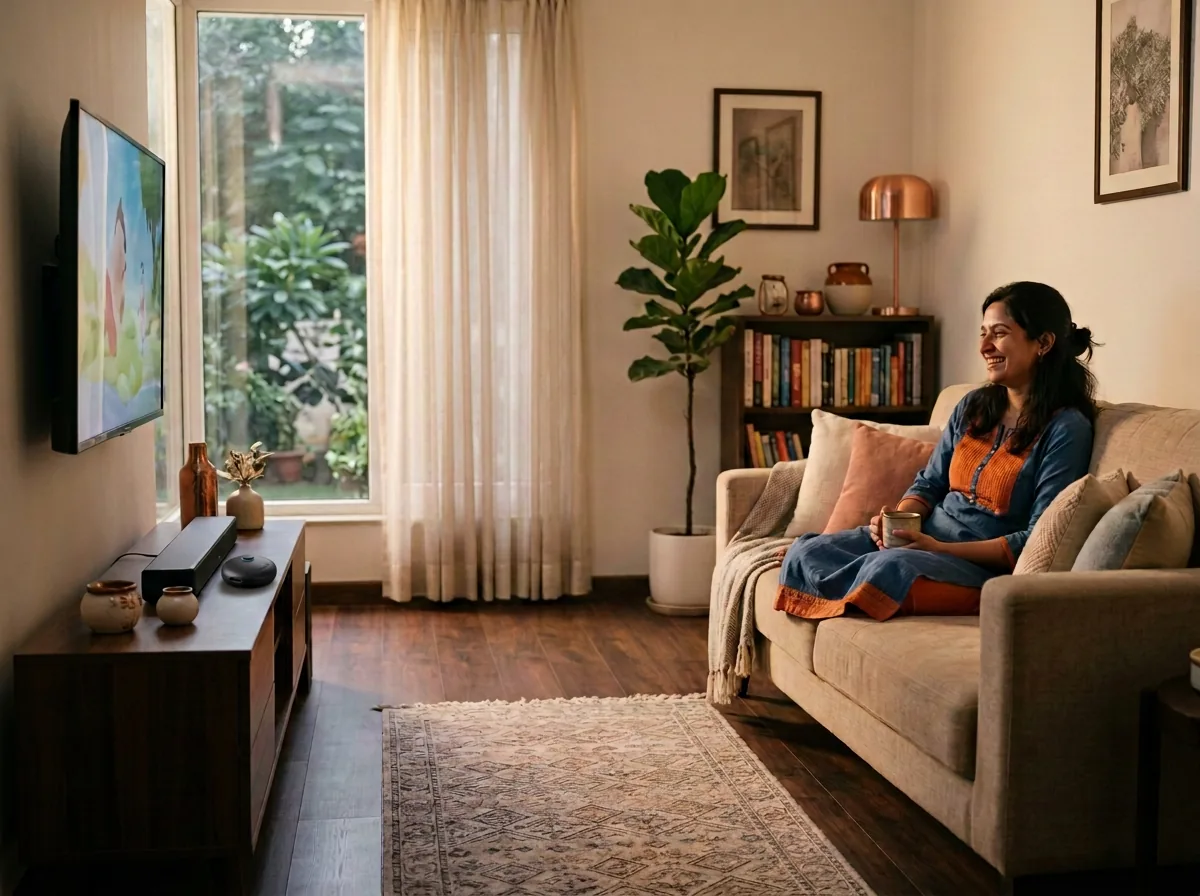
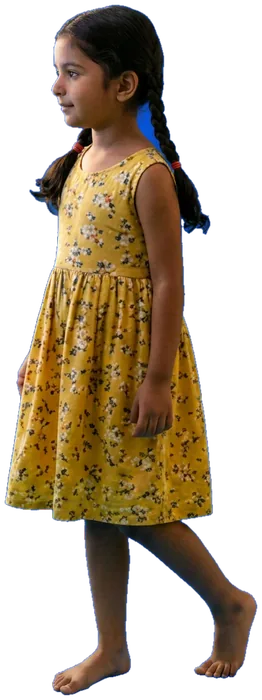
It starts out fine.
A little closer for the exciting part. A little closer again. Soon they're right up against the screen—and you're saying the same thing for the fifth time.
“A little farther back, please.”
“I’ll hold the boundary.”
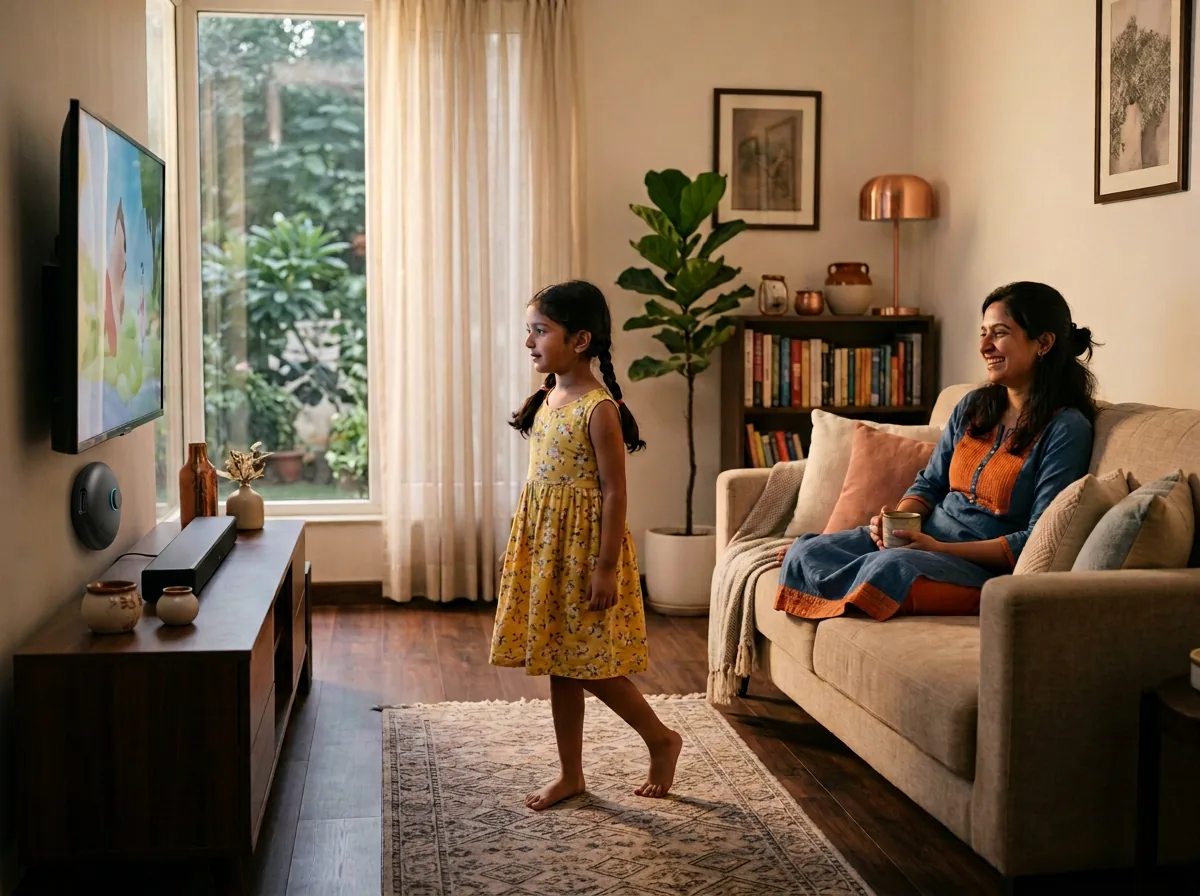 BALAKSH
Not less screen time. Better screen habits.
Screens are part of childhood now. The goal is not to make them the enemy. It is to make space for distance, pauses and a little more balance—without another daily battle.
A child can understand “the picture comes back when I move back.”
A gentle pause breaks the moment before the reminder becomes a fight.
Back in the zone, playback resumes. The story does not have to end.
What your voice has been carrying
Move the child closer. This is the point where Balaksh takes over the reminder—calmly, consistently, every time.
Slide the control to see how Balaksh works in real time.
Balaksh does not punish the child or turn the screen black forever. It makes the connection simple: move back, keep watching.
Your worry is real. The tool should be honest.
When a child is inches from a screen or locked into a scroll, parents feel the worry immediately. Balaksh focuses on one thing it can do well: create more space and make the reset consistent.
Balaksh encourages healthier viewing distance and calmer screen habits. It is not an eye-care treatment, a diagnosis tool or a substitute for professional advice.
 VIEWING DISTANCEBALAKSH
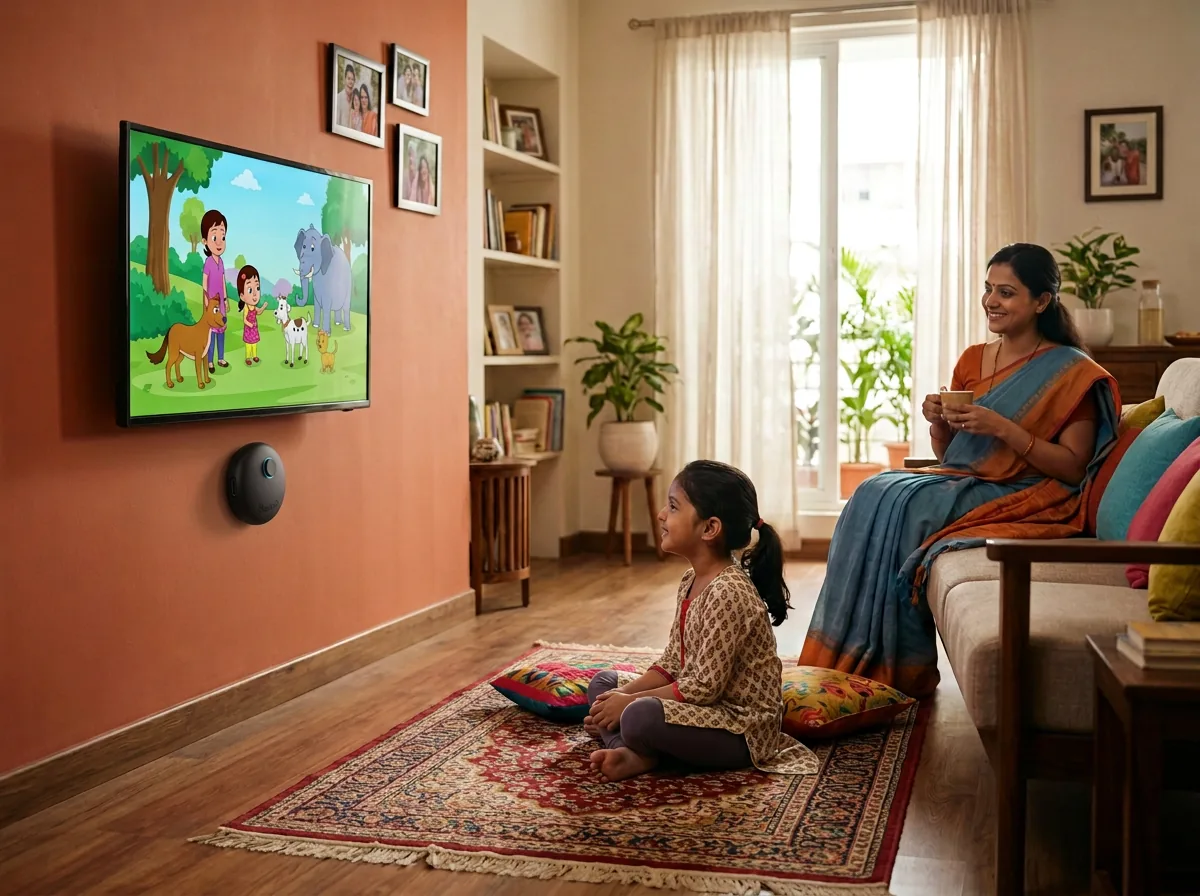
A clear gap helps keep close-up viewing in check—without hovering beside them. Balaksh is a viewing aid, not eye-care treatment.
CALM CUEBALAKSHRepeat the same calm boundary until moving back becomes easier to remember.
 BEYOND ONE SCREEN
No camera, no face recognition and no child data needed to do its one job.
One small boundary can make viewing distance easier. It is only one part of a healthy family media rhythm.
Facts with context
“Screen addiction” is common language. Researchers often study problematic smartphone use—when digital use becomes difficult to control or starts interfering with sleep, school, relationships or everyday life. These findings show patterns, not a diagnosis for your child.
Across 41 studies involving 41,871 participants in a systematic review.
Read the systematic review ↗The same review found an association between problematic smartphone use and poorer sleep quality.
See the study details ↗A 2024 cross-sectional study of 512 adolescents aged 11–18 also reported 51.2% poor sleep quality.
Read the PLOS ONE study ↗A global meta-analysis of 89,163 children found 35.6% met that guideline.
Read the JAMA analysis ↗Studies use different definitions, ages and measures. Most report associations rather than proof that screens caused an outcome. The figures above should inform a family conversation—not label a child.
The functionality, in one glance
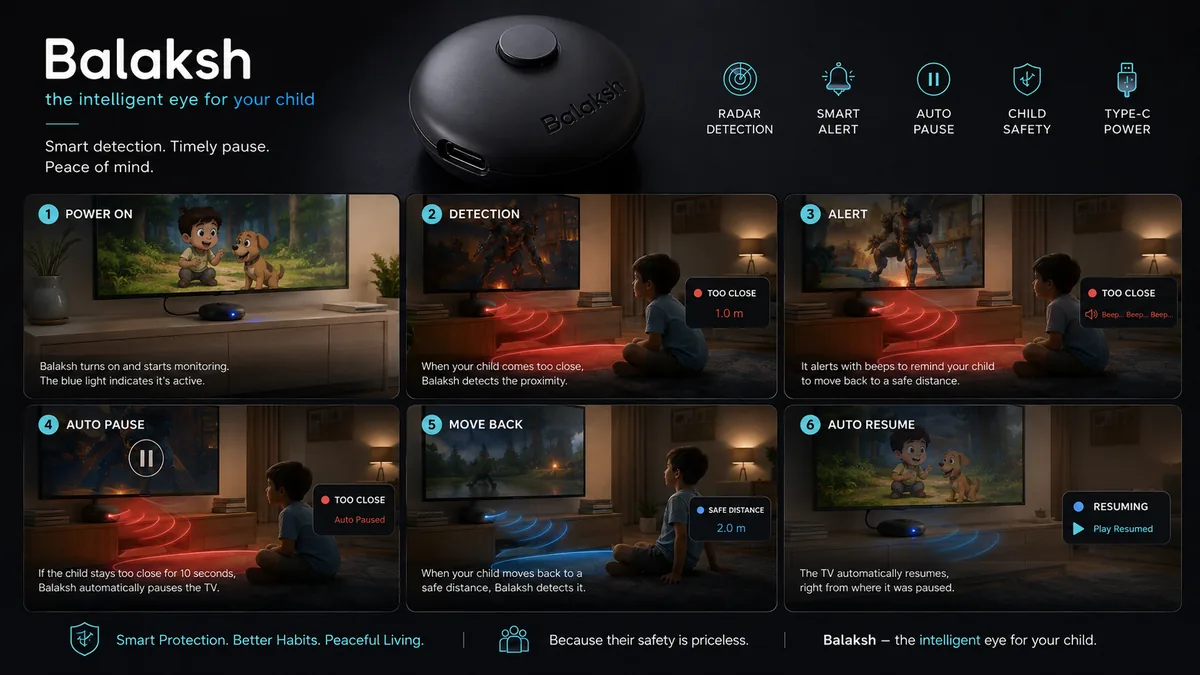
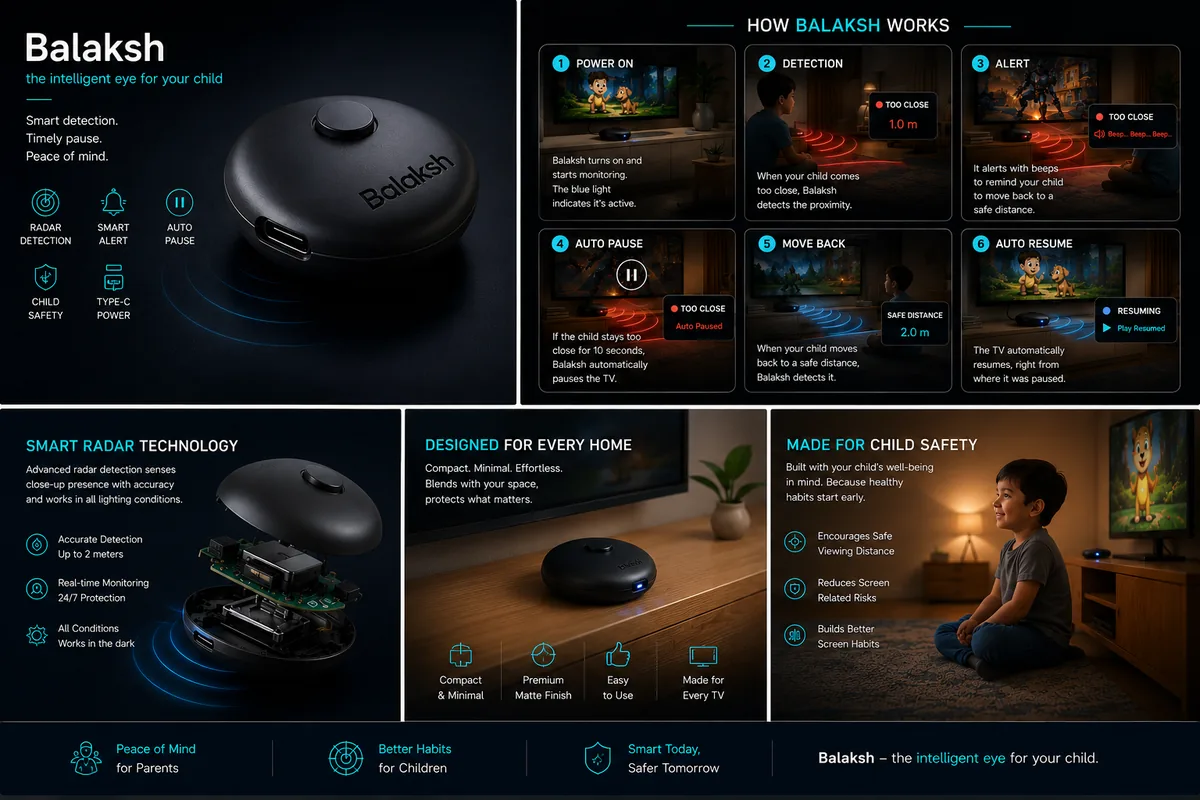
Balaksh senses the 1 m boundary, pauses the screen when a child moves too close, and resumes playback when they step back.
Balaksh senses when someone crosses the viewing boundary.
An optional gentle sound—or just the pause—makes the cue clear.
The connected screen waits. No argument, no negotiation.
Move back into the zone and the story carries on.
 BALAKSH
You are not failing at this.
It is normal to feel pulled in two directions: you want your child to enjoy the things they love, and you want to protect the habits they are still learning.
Balaksh cannot make every screen decision for you. It can make one decision easier to hold: when they come too close, the room gently asks for space.
Give the reminder somewhere else to live ↗For calmer evenings
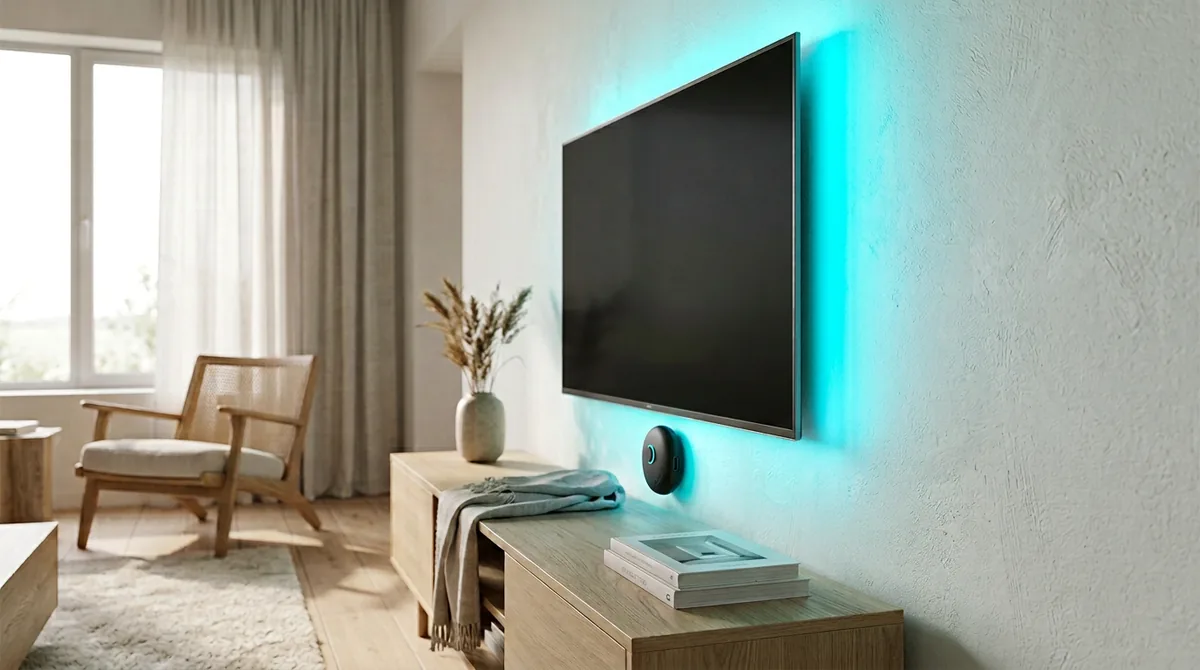
A camera-free distance companion for your family room.
No payment is taken yet. We confirm availability, compatibility and delivery before finalizing your order.
For the people who help good products travel
Distributors, retailers and business partners: tell us where you see Balaksh fitting. We will reply directly and explore the right next step.
Talk regional distribution, fulfilment, volumes and launch plans.
Discuss store placement, product education and local customer demand.
Explore collaborations, family-focused programs and compatible experiences.
Trust is part of the product
Still thinking it through? That is what good parents do. Ask us anything.

Look for interference, not just a single hour count: difficulty stopping, sleep being pushed later, less play or family time, or repeated conflict when the screen ends. If these patterns persist or worry you, speak with your child’s pediatrician or eye-care professional.
No. Balaksh is not a screen-time timer. It focuses on one practical behavior: encouraging a healthier distance from the screen, then letting playback continue when the distance returns.
No. The product direction is camera-free and responds to a proximity event rather than a face, name or child profile.
The boundary can be tuned for your room. The intended experience is a gentle cue and pause, not an alarm for every small movement.
No. It is a behavioral aid that encourages viewing distance. It does not diagnose, treat or prevent eye conditions and does not replace advice from an eye-care professional.
The first edition is being designed around common family-room screens. Final integrations and compatibility will be confirmed before launch.
Questions before you buy?
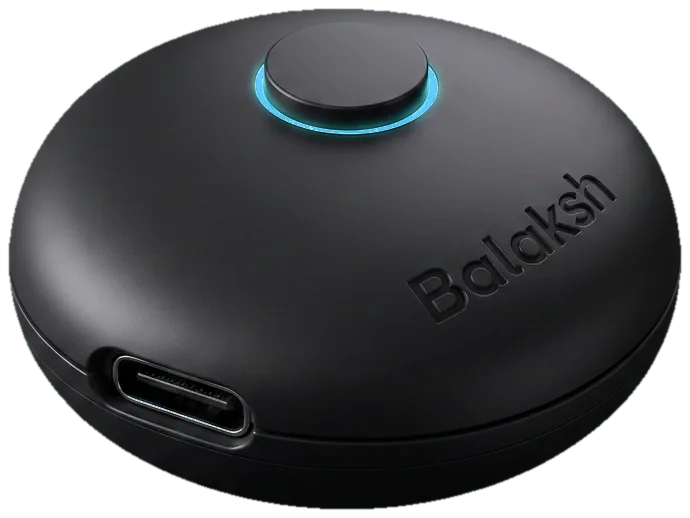 ONE SMALL DEVICE
Product questions, compatibility, support or launch updates—send us a note.
Parenting is hard enough
without repeating one sentence
all evening.
distance intelligenceBalaksh is not another screen-time app. It is a physical smart sensor for the TV environment, designed to make a viewing-distance boundary easier for a child to follow.
Reserve before launch. No payment is collected at this stage; availability and compatibility are confirmed before an order is finalised.
Final response behaviour can vary by TV, connected device, media app and software.
Balaksh is designed as a smart sensor for TV environments: it detects when a child moves inside a configured viewing boundary and provides a calm cue. It is not a medical device and does not claim to prevent eye disease. Instead, it helps parents make a healthy screen-distance rule easier to follow.
Learn how a TV sensor and proximity sensing can support child screen safety without relying on a camera.
Explore smart TV sensor →Understand what screen-distance devices can and cannot do, and how they fit into broader healthy screen habits.
Read the child eye protection guide →Explore practical guidance for children’s TV viewing distance and why distance is only one part of healthy screen use.
TV distance guide →